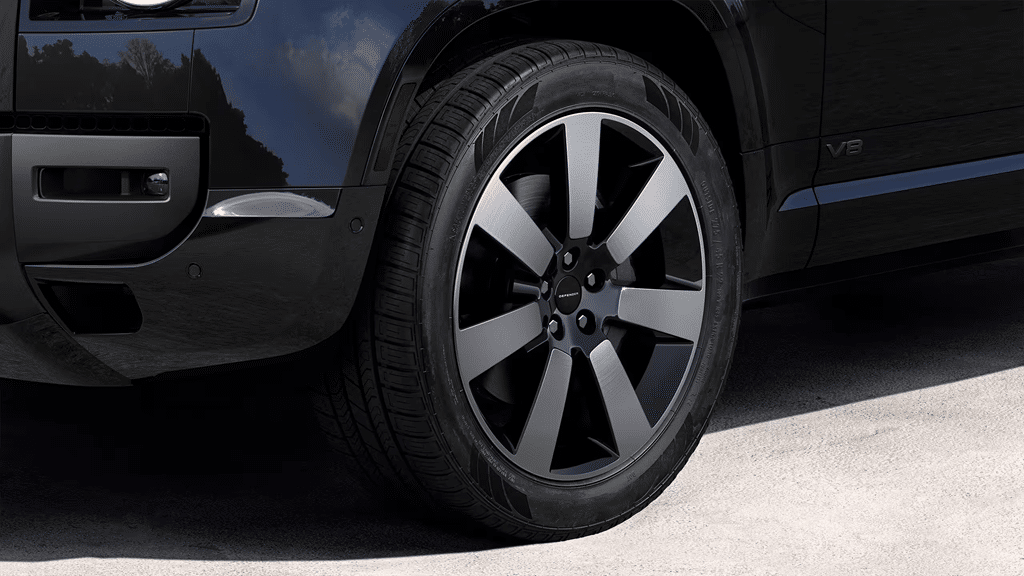
The Land Rover Defender towing capacity reaches 8,200 lbs (3,720 kg) when properly equipped, making it one of the more capable choices in its class for Canadian buyers as of 2026. That number gets cited often. What’s rarely explained is the context GTA owners actually need. Which body style reaches that maximum? What equipment is required? And what does 8,200 lbs look like on Highway 400 heading north to cottage country?
This guide breaks down Defender towing capacity across every variant available in Canada for the 2026 model year, explains the critical role of the Towing Pack, and connects those figures to real-world loads that Greater Toronto Area owners care about most. Whether you’re hauling a boat to Georgian Bay or pulling a camper through Muskoka, here’s what you need to configure the right Defender for the job.
Defender Towing Capacity Across Every Body Style
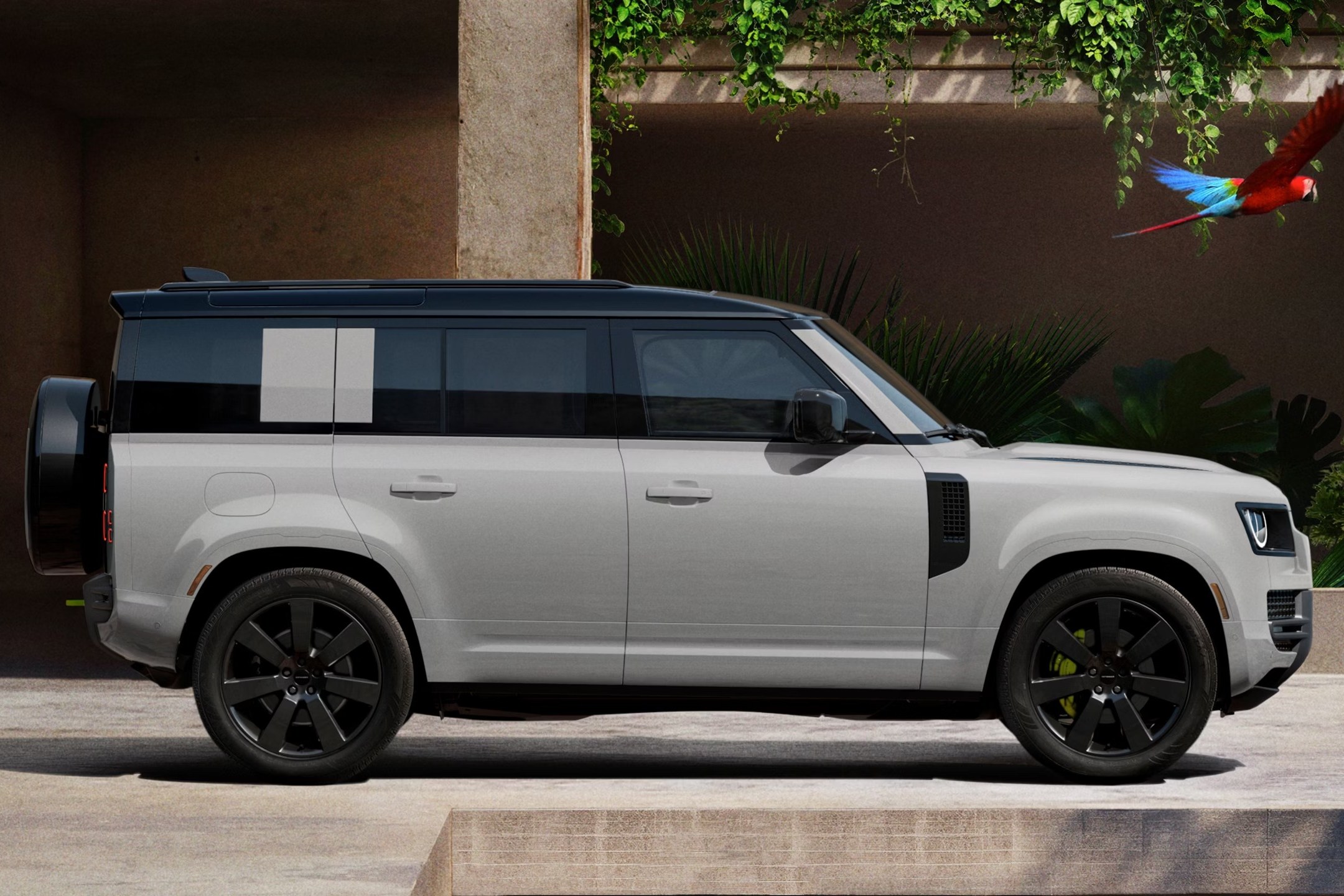
The 2026 Defender lineup in Canada includes four distinct variants: the Defender 90, Defender 110, Defender 130, and the Defender OCTA. Each serves a different purpose, and towing capacity varies accordingly.
The Defender 90 is the most compact expression of the lineup. Short wheelbase. Purpose-built agility. It suits buyers who prioritize manoeuvrability on narrow trails and city streets alike, and it still delivers serious towing capability when equipped with the proper package. For more on what separates the different body styles, see our overview of the Land Rover Defender lineup options.
The Defender 110 adds space for up to seven occupants with an optional third-row configuration. For families in Woodbridge or Vaughan who need both passenger room and weekend hauling ability, the 110 represents a practical middle ground, and it’s the variant most commonly configured for towing among GTA buyers.
The Defender 130 stretches the platform further, seating up to eight with captain chairs now available for 2026. That extended wheelbase and added mass affect towing figures slightly. The Defender 130 S trim is rated at 7,716 lbs (3,500 kg) rather than the full 8,200 lbs. The additional body length and passenger capacity shift weight distribution, which is why Land Rover rates it differently. Read more about the extended platform in our piece on the Defender 130 third row comfort.
The Defender OCTA sits at the top of the range as the most powerful Defender ever produced, an extreme-performance flagship engineered for capability well beyond daily commuting.
Why the Defender 130 Has a Lower Rating
Longer wheelbase means more vehicle weight. More vehicle weight means the powertrain, brakes, and chassis must manage a greater combined mass, vehicle plus trailer. Land Rover rates each configuration individually to ensure safe, controlled towing. The 484-lb difference between the 130 S and the 110’s maximum reflects responsible engineering. And 7,716 lbs still handles the vast majority of recreational trailers Canadian families use.
The Towing Pack and Why It Matters
Here’s where many buyers get tripped up. The 8,200-lb figure requires the Land Rover Towing Pack. Without it, your Defender isn’t rated to tow at that maximum.
The Towing Pack is a factory-configurable option available through authorized Canadian dealers. It typically includes the trailer hitch receiver, the electrical wiring harness for trailer lighting, and cooling system enhancements designed to manage the thermal load of sustained towing.
Can It Be Added After Purchase?
Buyers who didn’t spec the Towing Pack at the time of ordering should speak with their dealer’s service team about retrofit options. Land Rover genuine parts ensure the installation meets the same standards as a factory-equipped vehicle. Book a service appointment at Coventry North and the team can walk you through availability and lead times.
Towball Weight and the Rear Axle Limit
This is the specification that virtually no competing resource mentions, and it’s arguably the most important one for safe towing.
The Defender’s rear axle has a weight limit of 1,800 kg (3,968 lbs). Towball weight, sometimes called tongue weight, is the downward force the trailer’s coupler exerts on the hitch. Industry guidance generally suggests tongue weight should fall between 10 and some total trailer weight for conventional trailers.
Why does this matter? You could tow a trailer weighing well under 8,200 lbs and still exceed the rear axle limit if the trailer is improperly loaded with too much weight forward of its axle. Proper weight distribution, using a weight-distribution hitch when appropriate, and loading cargo toward the trailer’s centre of gravity all help keep you within safe limits.
A quick reference: Some 8,200 lbs is 1,230 lbs (558 kg), which sits comfortably under the 1,800 kg rear axle limit. But add passengers, cargo in the Defender’s boot, and a heavily front-loaded trailer, and those margins tighten. Always weigh your setup before a long haul.
What the Defender Can Actually Tow
Abstract numbers become meaningful when you attach them to real objects. Here’s a general reference for common loads Ontario owners tow, particularly those heading north from the GTA to the province’s lakes, trails, and campgrounds.
- A typical 18-to-20-foot fibreglass bowrider on a single-axle trailer: 3,500 to 5,000 lbs (1,588 to 2,268 kg)
- A pair of personal watercraft on a double trailer: 2,000 to 2,800 lbs (907 to 1,270 kg)
- A mid-size travel trailer (20 to 24 feet): 4,000 to 6,500 lbs (1,814 to 2,948 kg)
- A two-horse bumper-pull trailer (loaded): 5,000 to 7,000 lbs (2,268 to 3,175 kg)
- A single ATV or side-by-side on a utility trailer: 1,800 to 3,500 lbs (816 to 1,588 kg)
- A small enclosed cargo trailer: 2,500 to 4,500 lbs (1,134 to 2,041 kg)
The Defender 110 or 90 with the Towing Pack handles all of these within its rated capacity. Even the Defender 130 S at 7,716 lbs covers every scenario on this list except the heaviest horse trailer configurations. For buyers across Vaughan, Toronto, and the broader GTA, the Defender comfortably manages the weekend cottage run with a loaded boat trailer in tow.
Ontario Towing Considerations for Defender Owners
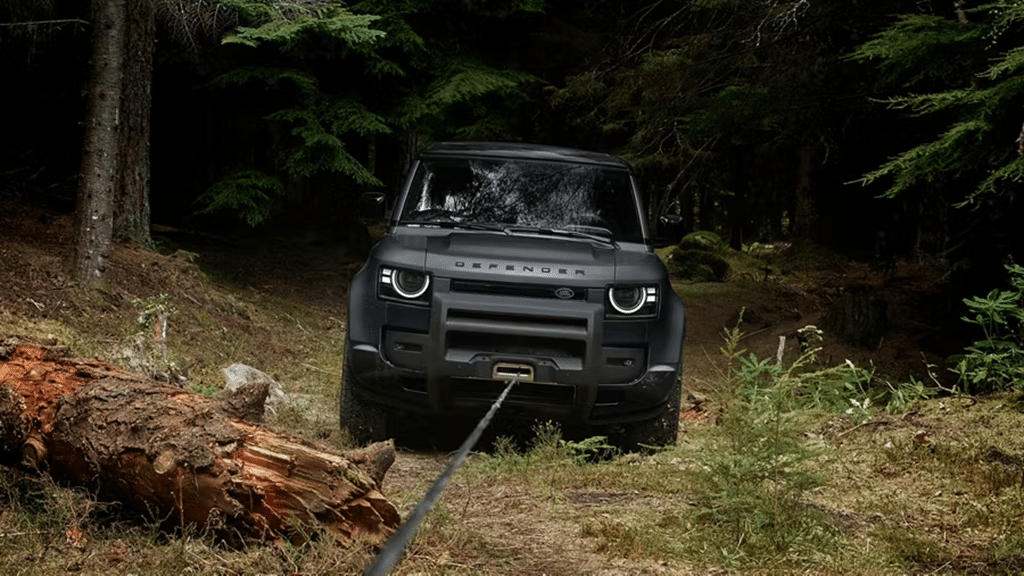
Towing in Ontario comes with regulations worth reviewing with your dealer before your first haul.
Trailers over a certain weight threshold require their own braking system. If you’re towing a travel trailer or loaded boat trailer near the upper end of the Defender’s capacity, trailer brakes aren’t just advisable, Ontario law requires them. Your trailer also needs its own licence plate and registration, separate from the tow vehicle.
Lighting is another consideration. The Towing Pack’s wiring harness ensures your Defender communicates brake lights, turn signals, and running lights to the trailer, but verify all connections each time you hitch up. A quick walk-around takes two minutes and prevents a roadside stop.
For buyers new to towing, the team at Coventry North Land Rover in Woodbridge serves customers in English, Cantonese, Mandarin, Gujarati, Spanish, Punjabi, and Farsi, making it straightforward to discuss configuration, towing accessories, and setup in your preferred language.
How Defender Towing Capacity Compares to Other SUVs
GTA buyers cross-shopping the Defender often consider the Toyota 4Runner, Jeep Wrangler, and Ford Bronco. The Defender’s 8,200-lb maximum sits at the upper end of this segment. The Wrangler and Bronco typically offer lower maximum towing figures, while the 4Runner competes closely depending on configuration.
What separates the Defender is its combination of all-terrain capability, refined on-road presence, and towing confidence. The permanent all-wheel-drive system, Terrain Response technology, and Land Rover’s heritage dating to 1948 all contribute to a towing experience that feels composed, whether you’re merging onto the 407 or navigating a gravel road to a lakeside launch ramp. For the latest 2026 specifications, visit Land Rover Canada’s Defender page.
Configuring Your Defender for Towing at Coventry North
The right configuration depends on what you tow, how often, and how far. A buyer pulling a personal watercraft trailer a few weekends per summer has different needs than someone hauling a horse trailer weekly.
Start with body style. The 90 works for lighter, less frequent loads. The 110 is the most versatile choice for regular towing. The 130 prioritizes passenger space and still tows capably, though its rated capacity is slightly lower. For a closer look at how the 2026 model year refines the entire lineup, see our breakdown of 2026 Defender off-road hardware and Terrain Response systems.
Then spec the Towing Pack. This is non-negotiable if you intend to tow at or near the Defender’s rated maximum. Coventry North Land Rover in Woodbridge can help you explore the current Defender inventory and order the right configuration, with a concierge ownership experience from order through to delivery.
Contact the dealership directly for current availability and to discuss which powertrain and trim combination suits your towing requirements. Coventry North serves Woodbridge, Vaughan, Toronto, and the surrounding Greater Toronto Area as of 2026.
Frequently Asked Questions
What is the maximum towing capacity of the Land Rover Defender?
The Defender towing capacity reaches up to 8,200 lbs (3,720 kg) when equipped with the Towing Pack. This figure applies to the Defender 90 and Defender 110 in their properly configured trims for the 2026 model year. The Defender 130 S is rated at 7,716 lbs (3,500 kg) due to its extended wheelbase and greater vehicle weight. Always confirm the specific rating for your chosen trim and powertrain with your dealer before towing.
Does the Defender need the Towing Pack to reach its maximum rating?
Yes. The Towing Pack is required to achieve the full rated towing capacity. It includes the hitch receiver, trailer wiring harness, and additional cooling components. Without it, the vehicle isn’t rated to tow at the maximum figure. Authorized dealers like Coventry North in Woodbridge can configure the pack at time of order or discuss retrofit options through their service department for vehicles already on the road.
Can a Defender tow a boat to cottage country in Ontario?
Absolutely. A typical 18-to-20-foot bowrider on a single-axle trailer weighs between 3,500 and 5,000 lbs, well within the Defender’s capacity. Many GTA owners tow boats to Lake Simcoe, Georgian Bay, and Muskoka without issue. Ensure your trailer has its own brakes if it exceeds Ontario’s weight threshold, verify all lighting connections, and distribute cargo weight properly across the trailer for safe, controlled towing.
Why does the Defender 130 have a lower towing capacity than the 110?
The 130’s extended wheelbase accommodates up to eight passengers, which adds vehicle weight. That additional mass reduces the margin available for trailer weight under the vehicle’s gross combined weight rating. Land Rover rates each body style individually to maintain safe braking, handling, and powertrain performance. At 7,716 lbs, the 130 still handles the vast majority of recreational trailers used by Ontario families as of 2026.
What is towball weight and why should Defender owners care about it?
Towball weight, also called tongue weight, is the downward force the trailer coupler places on the Defender’s hitch point. The rear axle limit of 1,800 kg (3,968 lbs) sets the ceiling. Exceeding it compromises steering response and braking stability. Proper trailer loading, keeping heavier cargo ahead of but close to the trailer axle, and using a weight-distribution hitch when appropriate help manage this figure safely on every drive.
How does the Defender compare to the Jeep Wrangler and Ford Bronco for towing?
The Defender’s 8,200-lb maximum places it at the upper end of the rugged SUV segment as of 2026. Both the Wrangler and Bronco typically offer lower towing capacities in their standard configurations. The Defender also pairs its towing capability with refined on-road composure, permanent all-wheel drive, and Terrain Response technology, a distinct advantage for buyers who tow regularly across varied Canadian conditions.
Where can I configure a Defender for towing near Toronto?
Coventry North Land Rover in Woodbridge serves buyers across Vaughan, Toronto, and the Greater Toronto Area. Their team assists customers in English, Cantonese, Mandarin, Gujarati, Spanish, Punjabi, and Farsi. Explore available Land Rover Defender inventory or contact the dealership directly to discuss Towing Pack availability and order timelines for the 2026 model year.
Disclaimer: Content contained in this post is for informational purposes only and may include features and options from US or international models. Please contact the dealership for more information or to confirm vehicle, feature availability.