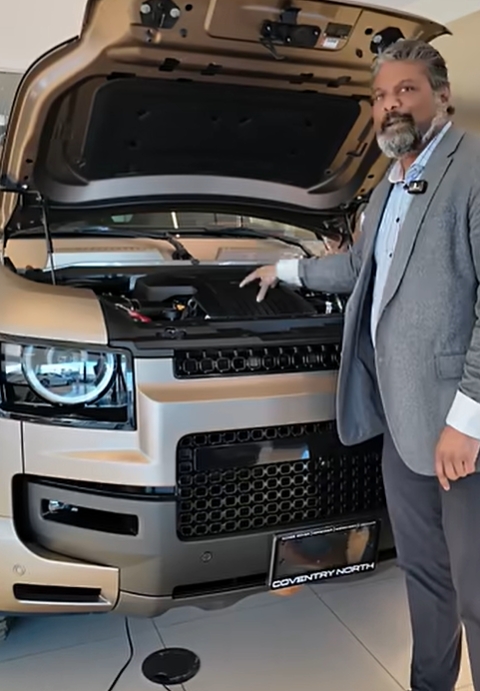
The Defender continues within the current generation introduced for the 2020 model year. It is built on the D7x platform, a dedicated architecture designed for durability and off-road capability. The structure, suspension systems, driveline components, and electronic controls work together to support operation on uneven terrain, loose surfaces, and steep inclines.
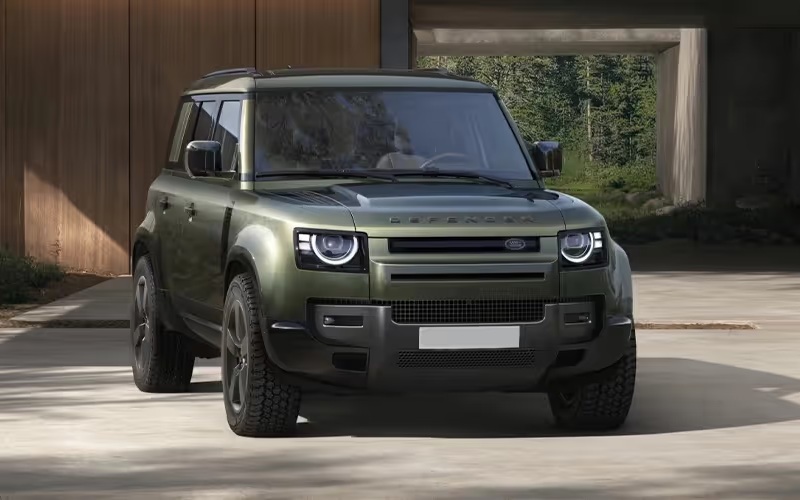
Available body styles within this generation include:
- Defender 90 (short wheelbase)
- Defender 110 (standard wheelbase)
- Defender 130 (extended wheelbase)
Each version shares the same core off-road hardware and Terrain Response systems, with variations in dimensions and load capacity.
D7x Platform Construction
The Defender uses the D7x aluminum monocoque architecture.
Key structural characteristics include:
- Aluminum-intensive body structure
- Integrated body and frame design
- High torsional rigidity
This platform differs from traditional body-on-frame construction. The integrated structure increases stiffness and supports suspension precision.
The rigid body structure contributes to:
- Improved wheel articulation control
- Reduced body flex on uneven terrain
- Stable mounting points for suspension components
All-Wheel Drive System
Permanent all-wheel drive is standard across the Defender lineup.
Two-Speed Transfer Case
The system includes:
- High range for normal road use
- Low range for off-road conditions
Low range reduces gear ratios to increase torque at the wheels. This supports:
- Rock crawling
- Steep inclines
- Controlled descents
The transfer case operates electronically and integrates with Terrain Response modes.
Locking Differential Systems
The Defender offers advanced differential control systems.
Centre Differential
An electronically controlled centre differential manages torque distribution between front and rear axles.
The system adjusts torque allocation based on:
- Wheel slip
- Steering angle
- Throttle input
- Surface conditions
Active Locking Rear Differential
An optional electronically controlled rear differential enhances traction in low-grip situations.
This system can:
- Lock rear axle torque distribution
- Reduce wheel spin
- Improve stability on loose or uneven surfaces
Suspension System
Independent Suspension Layout
The Defender uses independent suspension at both front and rear axles.
This configuration supports:
- On-road stability
- Off-road articulation
- Controlled wheel movement
Electronic Air Suspension
Electronic air suspension is available on most variants.
System characteristics include:
- Variable ride height
- Automatic load levelling
- Adaptive damping
Ride height can increase for off-road use. Maximum ground clearance reaches approximately 291 mm with air suspension.
At highway speeds, ride height automatically lowers to enhance aerodynamic efficiency and stability.
Off-Road Geometry
Off-road capability depends on approach, departure, and breakover angles.
Approximate values with air suspension include:
- Approach angle: up to 38 degrees
- Departure angle: up to 40 degrees (depending on body style)
- Breakover angle: up to 28 degrees
These angles vary by wheelbase and suspension configuration.
Wading Depth
With air suspension, maximum wading depth reaches approximately 900 mm.
The vehicle uses:
- Sealed electrical connectors
- Raised air intake routing
- Water-sensing systems
Sensors detect water depth and provide information through the infotainment display.
Terrain Response 2 System
Terrain Response 2 controls multiple vehicle systems based on surface conditions.
Selectable modes typically include:
- Auto
- Grass/Gravel/Snow
- Mud/Ruts
- Sand
- Rock Crawl
Each mode modifies:
- Throttle calibration
- Transmission shift mapping
- Differential locking strategy
- Traction control thresholds
- Suspension height (where equipped)
Auto Mode
In Auto mode, the system monitors traction and automatically selects appropriate settings.
Sensors evaluate:
- Wheel slip
- Steering input
- Surface resistance
The system adjusts parameters without driver intervention.
All-Terrain Progress Control
All-Terrain Progress Control (ATPC) functions as a low-speed cruise control system for off-road use.
The driver selects a set speed between approximately 1.8 km/h and 30 km/h.
The system manages:
- Throttle input
- Braking force
This allows the driver to focus on steering over challenging terrain.
Hill Descent Control
Hill Descent Control maintains a controlled speed on steep declines.
When activated:
- The system applies individual wheel braking
- Speed remains constant without continuous brake pedal input
The driver can adjust descent speed using steering wheel controls.
Gradient Release Control
Gradient Release Control operates on steep inclines.
This system:
- Modulates brake pressure when the driver releases the brake pedal
- Prevents sudden acceleration downhill
It works in conjunction with Hill Descent Control and Terrain Response modes.
Traction and Stability Systems
The Defender integrates multiple electronic systems to manage wheel slip and vehicle balance.
Dynamic Stability Control
Dynamic Stability Control monitors:
- Yaw rate
- Steering angle
- Wheel speed
It applies selective braking and adjusts engine torque to maintain stability.
Electronic Traction Control
Electronic Traction Control limits wheel spin by:
- Applying brake force to slipping wheels
- Redirecting torque to wheels with traction
These systems integrate with differential control and Terrain Response.
Steering System
The Defender uses electric power-assisted steering.
System characteristics include:
- Variable assistance based on speed
- Integration with driver assistance systems
Steering calibration supports both on-road handling and low-speed manoeuvres on uneven terrain.
Brake System
The braking system includes:
- Ventilated disc brakes on all four wheels
- Anti-lock braking system
- Electronic brake-force distribution
- Emergency brake assist
Brake-based torque vectoring assists during cornering and low-traction situations.
Body Protection and Undershielding
Off-road hardware includes protective elements.
Available features include:
- Front undershield
- Rear undershield
- Fuel tank protection
- Raised air intake (accessory)
These components reduce the risk of damage when driving over rocks or uneven surfaces.
Wheel and Tire Configurations
The Defender offers multiple wheel sizes depending on variant.
Off-road-oriented configurations may include:
- All-terrain tires
- Larger sidewall profiles for impact absorption
Wheel diameter options vary by trim and body style.
Towing Capability
When properly equipped, maximum towing capacity reaches approximately 3,500 kg.
Towing support systems include:
- Trailer Stability Assist
- Advanced Tow Assist
- Configurable towing settings within the infotainment system
Trailer Stability Assist detects sway and applies selective braking to maintain alignment.
Off-Road Information Display
The central infotainment system displays real-time off-road data.
Available displays include:
- Steering angle
- Wheel articulation
- Differential lock status
- Vehicle pitch and roll angles
- Wading depth information
These displays support situational awareness during off-road operation.
Structural Durability and Testing
The D7x architecture is engineered for durability under off-road stress.
The integrated body structure supports:
- High torsional stiffness
- Suspension load management
- Secure mounting of driveline components
This structural foundation allows consistent performance across varied terrain conditions.
2026 Defender: Hardware and Terrain Response Systems
The Defender combines:
- D7x aluminum monocoque platform
- Permanent all-wheel drive
- Two-speed transfer case
- Electronic centre differential
- Available active locking rear differential
- Independent suspension with available air suspension
- Up to approximately 291 mm ground clearance
- Up to approximately 900 mm wading depth
- Terrain Response 2 system
- All-Terrain Progress Control
- Hill Descent Control
- Multiple traction and stability systems
These hardware components and electronic systems operate together to support traction, control, and durability in off-road environments.
Questions and Answers
What platform does the 2026 Defender use?
- It uses the D7x aluminum monocoque architecture.
What is the maximum wading depth with air suspension?
- Maximum wading depth reaches approximately 900 mm.
What does Terrain Response 2 adjust in the vehicle?
- It modifies throttle calibration, transmission mapping, differential-locking strategy, traction-control thresholds, and suspension height, where equipped.
What is the purpose of All-Terrain Progress Control?
- It maintains a low preset speed by managing throttle and braking during off-road driving.
What is the maximum towing capacity when properly equipped?
- Maximum towing capacity reaches approximately 3,500 kg.
Disclaimer: Content contained in this post is for informational purposes only and may include features and options from US or internacional models. Please contact the dealership for more information or to confirm vehicle, feature availability.