An authorized Land Rover service department operates under manufacturer guidelines and technical standards. An authorized service department follows procedures established for Land Rover vehicles, including maintenance schedules, diagnostic protocols, and repair specifications.
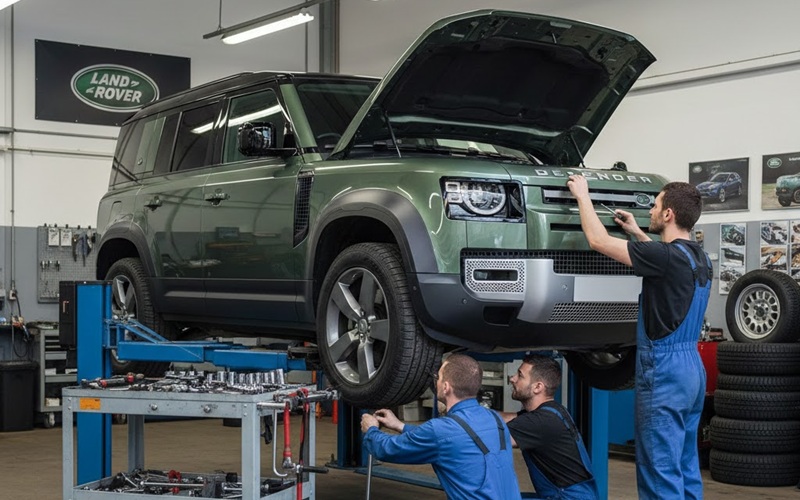
Authorized service departments use:
- Factory-approved diagnostic equipment
- Genuine Land Rover parts
- Manufacturer documentation
- Trained and certified technicians
These elements support consistent maintenance and vehicle care in accordance with Land Rover engineering requirements.
Manufacturer Maintenance Schedule
Land Rover vehicles follow defined intervals based on time and distance travelled.
Typical maintenance intervals may include:
- Oil and filter replacement
- Brake system inspection
- Tire inspection and rotation
- Fluid level checks
- Software updates
Service schedules vary by model and engine type. Vehicles equipped with Condition-Based systems monitor usage and provide alerts through the instrument cluster when maintenance is due.
Diagnostic Equipment and Software Systems
Authorized Land Rover service departments use factory diagnostic systems.
These systems allow technicians to:
- Access vehicle control modules
- Read fault codes
- Perform system calibrations
- Update vehicle software
- Reset service indicators
Electronic systems in modern Land Rover vehicles include multiple control units responsible for:
- Engine management
- Transmission control
- Suspension control
- Terrain Response Systems
- Driver assistance systems
Factory diagnostic tools communicate directly with these modules for accurate fault identification.
Engine and Drivetrain Maintenance
Engine service procedures follow manufacturer specifications.
Typical maintenance operations include:
- Engine oil and filter replacement using approved oil grades
- Air filter inspection or replacement
- Fuel filter replacement (on applicable engines)
- Cooling system inspection
Drivetrain service may include:
- Transmission fluid inspection or replacement (where applicable)
- Transfer case fluid
- Differential fluid inspection or replacement
Procedures adhere to torque specifications and fluid standards defined by Land Rover.
Brake System Inspection and Service
Brake systems require regular inspection.
Authorized service departments check:
- Brake pad thickness
- Brake disc condition
- Brake fluid level and quality
- Brake line integrity
Brake fluid replacement follows scheduled intervals due to moisture absorption over time.
Electronic brake systems integrate with:
- Anti-lock braking system
- Electronic stability control
- Terrain Response Systems
Diagnostic tools confirm proper operation after appointment.
Suspension and Steering System Care
Land Rover vehicles often include advanced suspension systems such as:
- Electronic air suspension
- Adaptive damping systems
Procedures may include:
- Ride height calibration
- Air suspension inspection
- Leak testing of air springs
- Steering alignment measurement
Wheel alignment uses manufacturer specifications to maintain proper tire wear and handling characteristics.
Tire Service and Wheel Alignment
Tire maintenance supports vehicle stability and safety.
Service departments perform:
- Tire rotation
- Tire pressure inspection
- Tire tread depth measurement
- Wheel balancing
Wheel alignment checks measure:
- Camber
- Caster
- Toe
Correct alignment supports consistent handling and even tire wear.
Battery and Electrical System Inspection
Modern Land Rover vehicles contain complex electrical systems.
Battery inspection includes:
- Voltage testing
- Load testing
- Terminal inspection
Vehicles with auxiliary batteries or mild hybrid systems require additional testing procedures.
Electrical system diagnostics may include:
- Charging system evaluation
- Alternator output testing
- Starter system inspection
Software calibration may be required after battery replacement.
Software Updates and Calibration
Land Rover vehicles receive periodic software updates.
Authorized departments can:
- Install control module updates
- Perform system recalibration
- Reset adaptive systems
Software updates may address:
- Engine performance parameters
- Transmission shift logic
- Infotainment system improvements
- Driver assistance system calibration
Updates are performed using manufacturer-approved equipment.
Genuine Parts and Replacement Components
Authorized service departments use genuine Land Rover parts.
These parts are designed to meet:
- Original equipment specifications
- Safety standards
- Performance requirements
Replacement components may include:
- Filters
- Brake components
- Suspension parts
- Electrical modules
Using genuine parts maintains compatibility with vehicle systems and preserves manufacturer warranty coverage.
Terrain Response and Driveline System Service
Land Rover vehicles often include Terrain Response systems and advanced driveline components.
Land Rover Service procedures may include:
- Transfer case inspection
- Differential fluid service
- Calibration of Terrain Response settings
- Inspection of driveshaft components
Diagnostic checks verify the correct function of:
- All-wheel drive systems
- Electronic differentials
- Traction control modules
Air Conditioning and Climate System Service
Climate control systems require periodic maintenance.
Land Rover Service tasks may include:
- Refrigerant level inspection
- Leak detection
- Cabin air filter replacement
- Climate control system diagnostics
Electronic climate systems integrate with cabin air quality sensors in certain models.
Vehicle Health Check Process
Authorized service departments often conduct a vehicle health check during service visits.
This inspection may include:
- Exterior lighting inspection
- Wiper blade condition
- Fluid level inspection
- Suspension component check
- Undercarriage inspection
Technicians document findings and follow manufacturer inspection guidelines.
Land Rover Service Documentation and Record Keeping
Service departments maintain digital records of:
- Maintenance history
- Software updates
- Warranty repairs
- Diagnostic findings
Accurate documentation supports:
- Warranty validation
- Resale value documentation
- Future diagnostic reference
Records align with manufacturer reporting systems.
Warranty and Recall Procedures
Authorized departments manage warranty repairs and recall campaigns.
Warranty procedures follow manufacturer authorization protocols.
Recall service may include:
- Component replacement
- Software updates
- Inspection procedures
Technicians confirm completion through manufacturer systems.
Technician Training and Certification
Land Rover technicians undergo manufacturer training programs.
Training covers:
- Mechanical systems
- Electrical systems
- Diagnostic procedures
- Hybrid and electrified systems
Certification ensures technicians understand:
- Current model technologies
- Repair specifications
- Safety procedures
Ongoing training supports knowledge of updated systems and service bulletins.
Safety and Workshop Standards
Authorized workshops operate in accordance with safety and equipment standards.
These standards include:
- Approved lifting equipment
- Torque calibration tools
- Diagnostic interface systems
- Battery handling procedures
Workshops follow manufacturer guidelines for safe vehicle servicing.
Land Rover Maintenance Standards and Vehicle Care
The Land Rover Service Department operates according to manufacturer requirements for:
- Scheduled maintenance
- Diagnostic evaluation
- Software calibration
- Brake and suspension service
- Driveline inspection
- Climate system service
- Warranty and recall management
The use of factory diagnostic tools, genuine parts, certified technicians, and documented procedures supports consistent vehicle care aligned with Land Rover engineering standards.
Questions and Answers
What type of parts does an authorized Land Rover service department use?
- It uses genuine parts designed to meet original equipment specifications.
What diagnostic tools are used in authorized service departments?
- Factory-approved diagnostic systems that access vehicle control modules and perform calibrations are used.
What is included in a typical brake system inspection?
- Brake pad thickness, brake disc condition, brake fluid quality, and brake line integrity are checked.
What systems may require software updates during service?
- Engine management, transmission control, infotainment systems, and driver assistance systems may receive updates.
What documentation does the service department maintain?
- It maintains digital records of maintenance history, software updates, warranty repairs, and diagnostic findings.
Disclaimer: Content contained in this post is for informational purposes only and may include features and options from US or internacional models. Please contact the dealership for more information or to confirm vehicle, feature availability.